Reforging the Maps
We continue our new behind-the-scenes series about the development of the Reforged Update. Take a look under the hood of the game!
What is the Reforged Update?
A major update of World of Tanks Blitz. The game will switch to Unreal Engine™ and get visual and technical improvements. Our goal is to bring the game up to date while preserving the iconic Blitz look and feel.
If tanks are the heart of Blitz, maps are what give that heart pressure, direction, and consequence. They give tanks room to shine and the right kind of challenge: speed, maneuvering, positioning, angling—and give players the chance to show real tactical wit. So this time, we’re talking specifically about maps: how the Reforged Update changed the way we build them, what got harder, what got better, and what you’ll actually notice in battle.
What Changed for Map Development
As we mentioned earlier, the Reforged update brings a powerful new engine under the hood—Unreal Engine™ 5. The previous engine served the game well for years, but over time it began to age faster than the team could modernize it.
Unreal Engine™ changes that: many of the tools we need already exist out of the box, and others require only minimal adaptation. That means less time forcing old tech to cooperate—and more time building systems that work the way they should.
It also changes how we approach map development itself. Iteration becomes faster, testing is more predictable, and new ideas are easier to implement and evaluate. This allows the team to focus more on refining gameplay and exploring creative solutions instead of working around technical limitations.
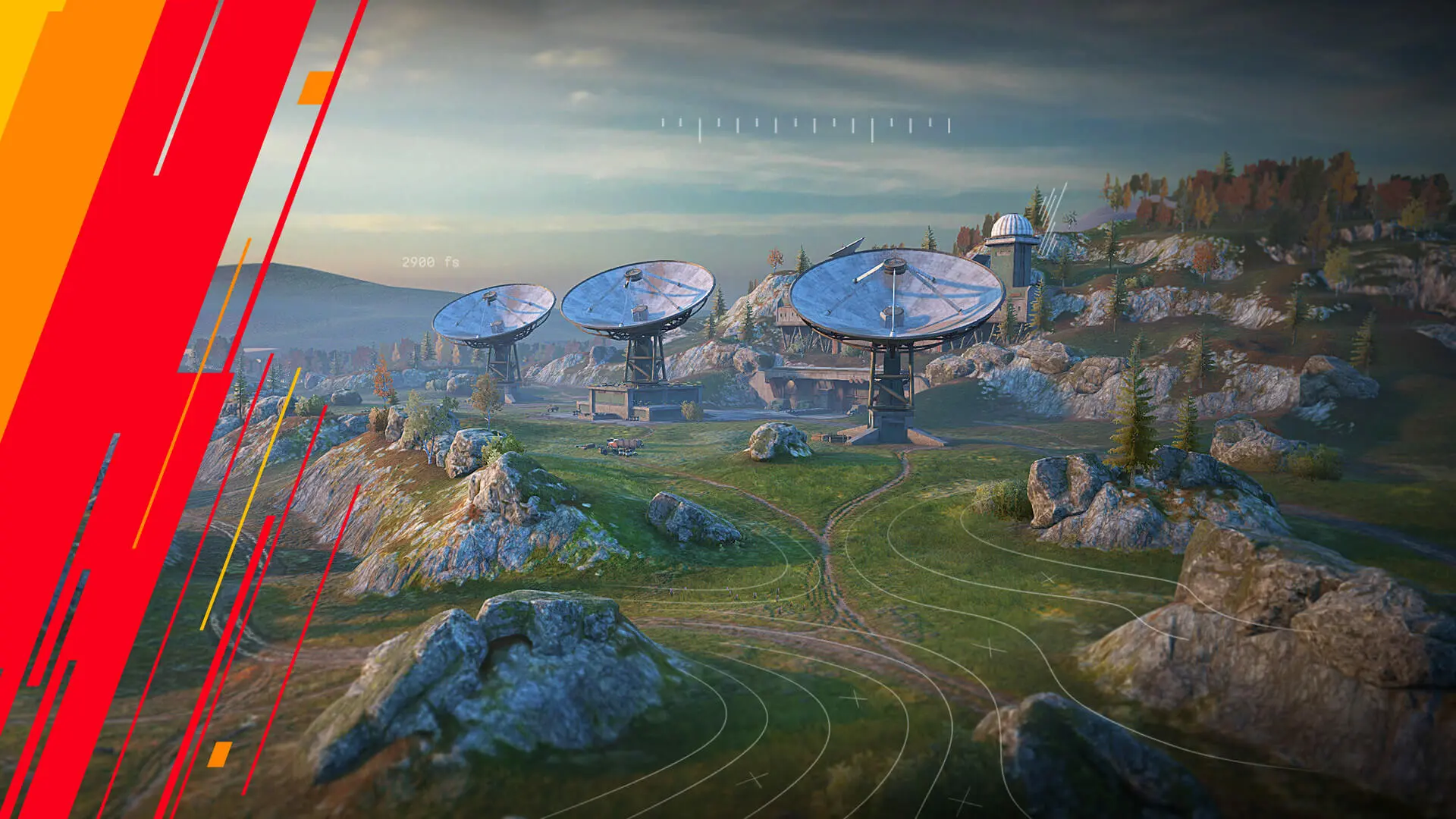
And the results are already visible in the game. Take Rockfield: Ultratest participants have seen it in action. The map has improved both visually and gameplay-wise, and early feedback suggests those changes have landed well.
The Balancing Act
The Reforged Update is not just about making maps look better. It’s about making them look better without losing gameplay accuracy, readability, or performance. And those things do not always pull in the same direction.
Map development is always about balance. We constantly juggle graphical quality, level of detail, client size, performance on weaker devices, and many other technical parameters. Some of them work together. Others fight each other the whole way.
The programming team worked hard to make sure the game runs smoothly even on modest smartphones. At the same time, designers had to ensure that the visual terrain matches the collision model stored on the server—the one used to calculate tank movement and shell trajectories.

Shift the balance one way, and the game would start lagging on weaker devices. Shift it the other way, and visual bugs would appear. Tanks could appear to glide above the ground. Shells could collide with what looked like empty space. Invisible edges could start interfering with shots.
So the task was never to “make it prettier.” The task was to keep visual richness, gameplay precision, and stable performance in the same fight—and make them work together.
That balance was not obvious on day one. But we found it, and a lot of subsequent decisions came out of that work.
More Than a Simple Port
Calling the transition a simple port would be misleading. In practice, much of the game had to be rebuilt. Map objects now have to be created differently, including how their geometry and materials are handled. At the same time, Unreal Engine™ makes this process faster and more straightforward for the team. It also allows map objects to look richer and more detailed, which enhances the overall gameplay experience.
The physics system had to be reconfigured as well. During testing, the team discovered that many positions on maps that used to be unreachable suddenly became accessible in the new engine. In some cases, this could be fixed directly on the map. In others, adjustments had to be made to the physics model itself. Either way, it meant checking familiar spaces under completely different technical conditions.
And occasionally, those tests got entertaining. During development, it turned out that under certain conditions on the Alpenstadt map, the IS-7 could climb almost straight up a vertical wall. Spectacular? Absolutely. Intended? Not even close.

Setting aside these occasional (and now fixed) quirks, the new physics system truly shines. It lets you feel the weight and inertia of your tank, while interactions between objects become more realistic and dynamic.
What Players Will Notice in Battle
For all the complexity behind the scenes, Unreal Engine™ also opens the door to changes players should feel right away. And the first thing that stands out is the vastly improved visuals and overall graphics of the game. Screenshots speak louder than words here.
There are also plenty of changes that are less noticeable at first glance. One major example is the collision system. Collisions are the invisible “shells” of map objects that determine how physical interactions work in the game, including shell impacts.

In the Reforged update, objects now have two types of collision. The first handles vehicle movement. This ensures tanks won’t get stuck in objects anymore, and collisions between vehicles will feel more natural and realistic.
The second type is used to trace player shots. That means shells behave more accurately around map geometry, can pass through narrow openings more reliably, and are less likely to shatter on minor environmental details that should not decide the fight.
Another area where players will feel the change is the environment itself. Unreal Engine™ gives the team far more freedom to build maps with denser, more varied, and more convincing greenery. And this is not just visual polish. Concealment values have also been reworked as part of that process.
Players will also see a new type of vegetation: tall grass. It provides less concealment than bushes, but can still help low-profile vehicles stay hidden. Just imagine moving through a wide-open wheat field without being spotted.

How New Maps Take Shape
The overall approach to creating maps hasn’t changed. The process still begins with an idea, collecting references, and creating an initial sketch. These early concepts combine years of development experience with years of playing the game, and a healthy amount of data about how players actually behave in battle.
From there, the team moves into blockout—a rough version of the level built in the engine from simple 3D shapes. Then come prototypes, tests, and adjustments. A lot of them. Only after that does the map move to the art team, where the final visual version starts taking shape.

In other words, creating new maps for Blitz combines cutting-edge development tools with years of development and player experience.
Old Maps, New Life
You’ll see these changes most clearly on familiar maps. Most returning maps will not enter Unreal Engine™ untouched. They are coming over in improved form. And these improvements are not there just for the sake of change: the move to the new engine gave the team a chance to revisit familiar locations and implement ideas that had previously been difficult or impossible to implement.
Take Castilla, which is now about 10% larger. New areas and extra routes have opened up around the edges, giving players more room for creative movement and more ways to shape fights instead of repeating them.
This work is ongoing. Around 80% of the current map pool is planned to make its way into the game over time. Some older locations that offered less from a gameplay perspective will be replaced by entirely new maps built from scratch.
But it’s not just about layout and gameplay. A large part of the Reforged Update is also about the artistic rework of locations—how maps look, feel, and read in battle. Many existing maps will receive a visual overhaul, with their style, atmosphere, and environmental details carefully reworked to create a more expressive and cohesive experience. We’ll take a closer look at these visual changes and artistic decisions in a separate article.
The goal is not to exaggerate visuals, but to make maps feel more immersive, believable, and engaging to play. And most importantly, you’ll feel that difference every time you enter a battle.
We’ll keep you posted on everything happening with the Reforged Update—stay tuned! In the meantime, check out the Reforging the Garage and Reforging the Battle articles in this series to stay fully up to date.